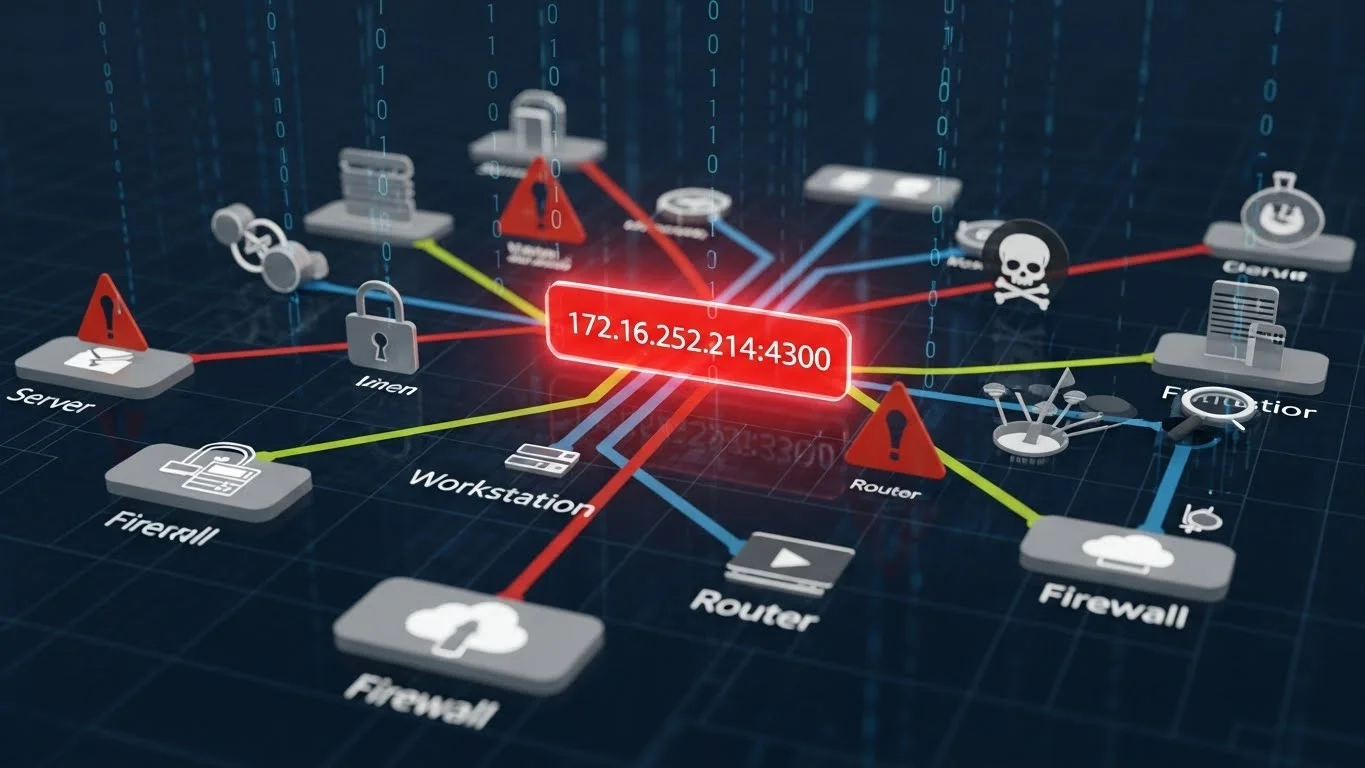
Have you ever come across a string of numbers like 172.16.252.214.4300 and wondered what it actually means? At first glance, it looks like a random sequence, but in the world of networking, every number has a purpose. Understanding these numbers can help you make sense of how devices communicate, how data travels, and why certain networks behave the way they do.
In this article, we’ll explore the meaning of 172.16.252.214.4300, its role in networking, and why understanding IP addresses and ports can be surprisingly useful for anyone who uses the internet.
What Is 172.16.252.214?
Let’s start with the first part: 172.16.252.214. This is an IP address, which stands for Internet Protocol address. Think of it like a home address for your device on a network. Just like a letter needs a correct address to reach you, data packets need an IP address to find the right device.
Interestingly, 172.16.252.214 falls under the category of private IP addresses. Private IP addresses are used within local networks, like your home Wi-Fi or an office network. They are not visible to the outside world directly, which helps with security and managing internal devices.
So, if you see 172.16.252.214, you know that this is likely part of a local network rather than a public-facing address on the internet.
What Does the .4300 Mean?
Now, let’s talk about the second part: .4300. This is not part of the IP address itself but is called a port number. Every device can have multiple ports, and each port acts like a doorway for a specific type of data.
For example, web traffic typically uses port 80 or 443. If you see 4300, it could be used for a custom application or service. Maybe it’s a game server, a file-sharing service, or an internal tool within a company.
Ports make it possible for multiple applications to run on the same device without interfering with each other. Imagine having one door for mail, another for packages, and another for visitors—that’s essentially what ports do for network traffic.
Why Do Private IP Addresses Matter?
You might wonder, “Why does it matter if an IP address is private?” Well, private IPs are crucial for managing networks efficiently. They allow many devices to connect to the internet through a single public IP.
Think about your home network. You might have a laptop, a smartphone, a smart TV, and a gaming console all connected at the same time. Each device needs an address so the router can send data correctly. By using private IPs like 172.16.252.214, your router keeps track of every device without exposing them to the wider internet directly.
This setup improves security and prevents conflicts. Without private IPs, we would quickly run out of unique public addresses for all the devices around the world.
How Data Travels to 172.16.252.214:4300
So, how exactly does data reach 172.16.252.214:4300? When a device wants to communicate with this IP, it sends packets of data through the network. The port number tells the device which application should handle the incoming data.
For example, if a file-sharing program is running on port 4300, any packets sent to 172.16.252.214:4300 will go directly to that program. The rest of the system ignores it. This method ensures data doesn’t get lost or end up in the wrong place.
The Difference Between Public and Private Ports
It’s important to understand the difference between public and private ports. Public ports are open to the internet and can receive traffic from anywhere. Private ports are usually restricted to local network traffic.
Using private ports like 4300 is a way to keep internal services safe from outside attacks. Companies often assign unique ports to internal applications, which makes it harder for hackers to find and exploit them.
Real-Life Applications of 172.16.252.214:4300
You might be asking, “Who actually uses this?” While the exact number is arbitrary, addresses like 172.16.252.214 combined with a custom port are common in:
-
Corporate Networks: Internal tools, databases, or management systems.
-
Gaming Servers: Multiplayer games often use specific ports for each server.
-
IoT Devices: Smart devices in homes or offices often use private IPs and custom ports.
-
File-Sharing Systems: Internal sharing apps can assign ports to keep traffic organized.
Essentially, anywhere a network needs to run multiple applications safely, you’ll find private IPs and unique ports.
How to Check if 172.16.252.214:4300 Is Active
Curious whether this IP and port are active on your network? There are several ways to find out. One popular method is using a command prompt or terminal on your computer. Commands like ping or telnet can help you check connectivity.
For instance, typing ping 172.16.252.214 tests if the device is online. To test the port, a command like telnet 172.16.252.214 4300 will try to open a connection to that specific service.
Keep in mind, if the device blocks unknown connections, you might not get a response. This is normal and actually good for security.
![172.16.252.214:4300 | 172.16.252.214.4300 IP Address [Guide]](https://www.techcults.com/wp-content/uploads/2026/01/image-1.webp)
Security Considerations
Whenever you deal with IPs and ports, security should be on your mind. Open ports can become entry points for hackers if not managed properly. That’s why it’s important to:
-
Keep your devices updated.
-
Use firewalls to control access.
-
Only allow necessary ports to be open.
-
Monitor network traffic for unusual activity.
For example, if 4300 is used for a file-sharing service, restricting access to trusted devices ensures your network stays safe.
Why Understanding IPs and Ports Is Useful
Even if you’re not a network admin, understanding IP addresses and ports can make you more tech-savvy. You’ll better understand why devices sometimes cannot connect, why your Wi-Fi may act strangely, or why certain apps require network permissions.
It also helps in troubleshooting. For instance, if a multiplayer game isn’t working, knowing that it uses a specific port and IP range can save hours of frustration.
Tips for Managing Private IPs in a Home Network
Managing private IPs like 172.16.252.214 doesn’t have to be complicated. Here are some friendly tips:
-
Use a consistent scheme: Assign a specific range for devices to make it easier to identify them.
-
Reserve IPs for important devices: Printers, servers, or cameras should have fixed addresses.
-
Monitor connected devices: Check your router to see all devices connected.
-
Change passwords regularly: Even internal networks benefit from updated credentials.
By following these tips, your network will run smoothly and securely.
The Future of Private IPs and Custom Ports
With the rise of smart homes, IoT devices, and remote work, private IP addresses and unique ports are more important than ever. Networks are becoming more complex, and understanding these numbers is no longer just for IT professionals.
Learning how to read an IP like 172.16.252.214 and recognizing a port like 4300 helps you stay ahead in a world where everything is connected.
Conclusion
So, next time you see 172.16.252.214.4300, remember it’s not just a random number. It represents a device within a network and a doorway for a specific service. Private IPs like this keep networks organized, secure, and functional.
Understanding IP addresses and ports gives you insight into how data travels, how devices communicate, and how networks stay safe. Whether you’re a casual user or a tech enthusiast, this knowledge is surprisingly practical.